32-03. PERFORMANCE CLASS B — MULTI-ENGINE AEROPLANES
Всего заданий: 90
В режиме ОБУЧЕНИЕ показываются все задания дисциплины с предъявлением правильных ответов. Для перехода к следующему заданию нажать кнопку «Далее».
Заданий на экзамен: 30
В режиме ЭКЗАМЕН правильные ответы не показываются, переход на следующее задание происходит автоматически, после выбора ответа.
1. The takeoff distance of an aircraft is 800 m in standard atmosphere, no wind at 0 ft pressure-altitude. Using the following corrections:
± 20 ml 1.000 ft field elevation
— 5 ml kts headwind
+ 10 ml kts tailwind
± 15 ml % runway slope
±5 ml°C deviation from standard temperature
The takeoff distance from an airport at 2.000 ft elevation, temperature 21 °C, QNH 1.013,25 hPa, 2% up-slope, 5 kts tailwind is:
.
2. (Refer to figure 032-05) Given:
OAT: 24 «C
Pressure Altitude: 3.000 ft
RWY: . 30R
Wind: 060V4 kts
Takeoff Mass: 3.800 lbs
Other conditions as associated in the header of the graph.
What is the takeoff distance over a 50 ft obstacle?
.

3. Which of the following factors favors the selection of a low flap setting for the takeoff?
4. On a twin engined piston aircraft with variable pitch propellers, for a given mass and altitude, the minimum drag speed is 125 kts and the holding speed (minimum fuel burn per hour) is 95 kts. The best rate of climb speed will be obtained for a speed:
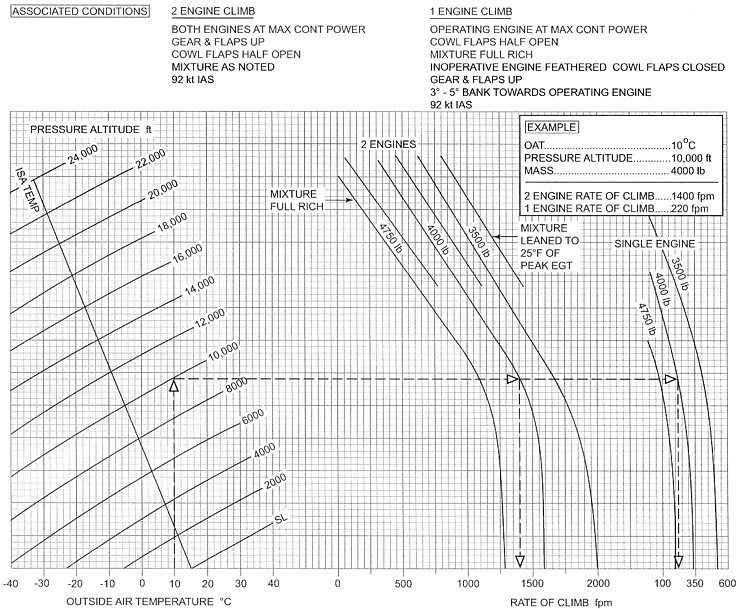
5. (Refer to figure 032-08)
Given:
OAT: — 20 °C
Pressure Altitude: 14.000 ft
Gross Mass: 4.000 lbs
Mixture: full rich
Other conditions as associated in the header of the graph.
What is the two engine rate of climb?
.