32-02. PERFORMANCE CLASS B — SINGLE-ENGINE AEROPLANES
Всего заданий: 51
В режиме ОБУЧЕНИЕ показываются все задания дисциплины с предъявлением правильных ответов. Для перехода к следующему заданию нажать кнопку «Далее».
Заданий на экзамен: 10
В режиме ЭКЗАМЕН правильные ответы не показываются, переход на следующее задание происходит автоматически, после выбора ответа.
1. (Refer to figure 032-13)
Using the Range Profile Diagram, for the single engine aeroplane, determine the range, with 45 minutes reserve, in the following conditions, given:
OAT: ISA
Pressure altitude: 4.000 ft
Power: Full throttle (25,0 in/Hg and 2.100 RPM)
.

2. What margin above the stall speed is provided by the landing reference speed VREF?
3. For an aeroplane in Performance Class B the following factors must be applied in determining the takeoff distance from dry grass and wet pavement respectively:
4. (Refer to figure 032-04)
With regard to the landing chart for the single engine
aeroplane determine the minimum runway length. Given:
OAT: 27 °C
Pressure Altitude: 3.000 ft, Aeroplane Mass: 2.900 lbs
Tailwind component: 5 kts, Flaps: Landing position (down)
Runway: Dry Grass 5 cm long
.

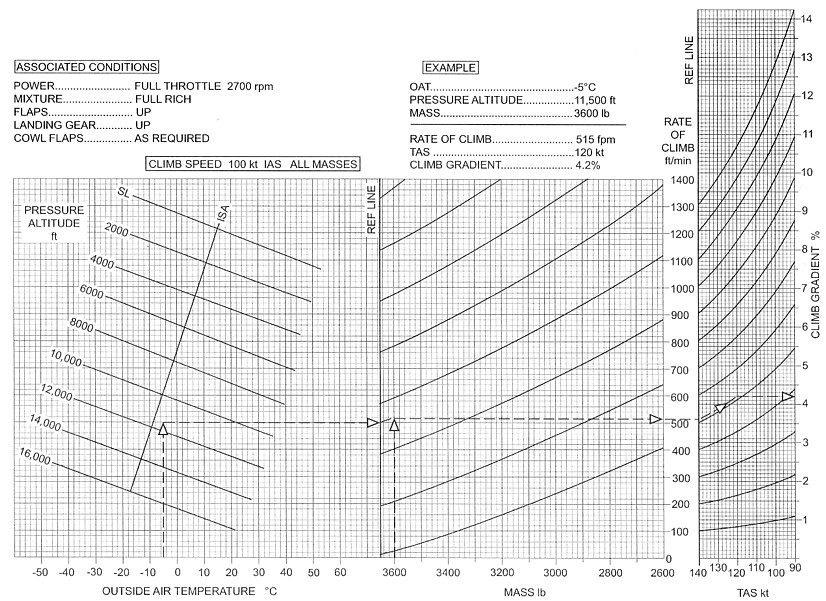
5. (Refer to figure 032-03)
With regard to the climb performance chart for the single engine aeroplane determine the climb speed (ft/min). Given:
OAT: f. ISA +15 °C
Pressure Altitude: 0 ft
Aeroplane Mass: 3.400 lbs
Flaps: up
Speed: 100 KIAS